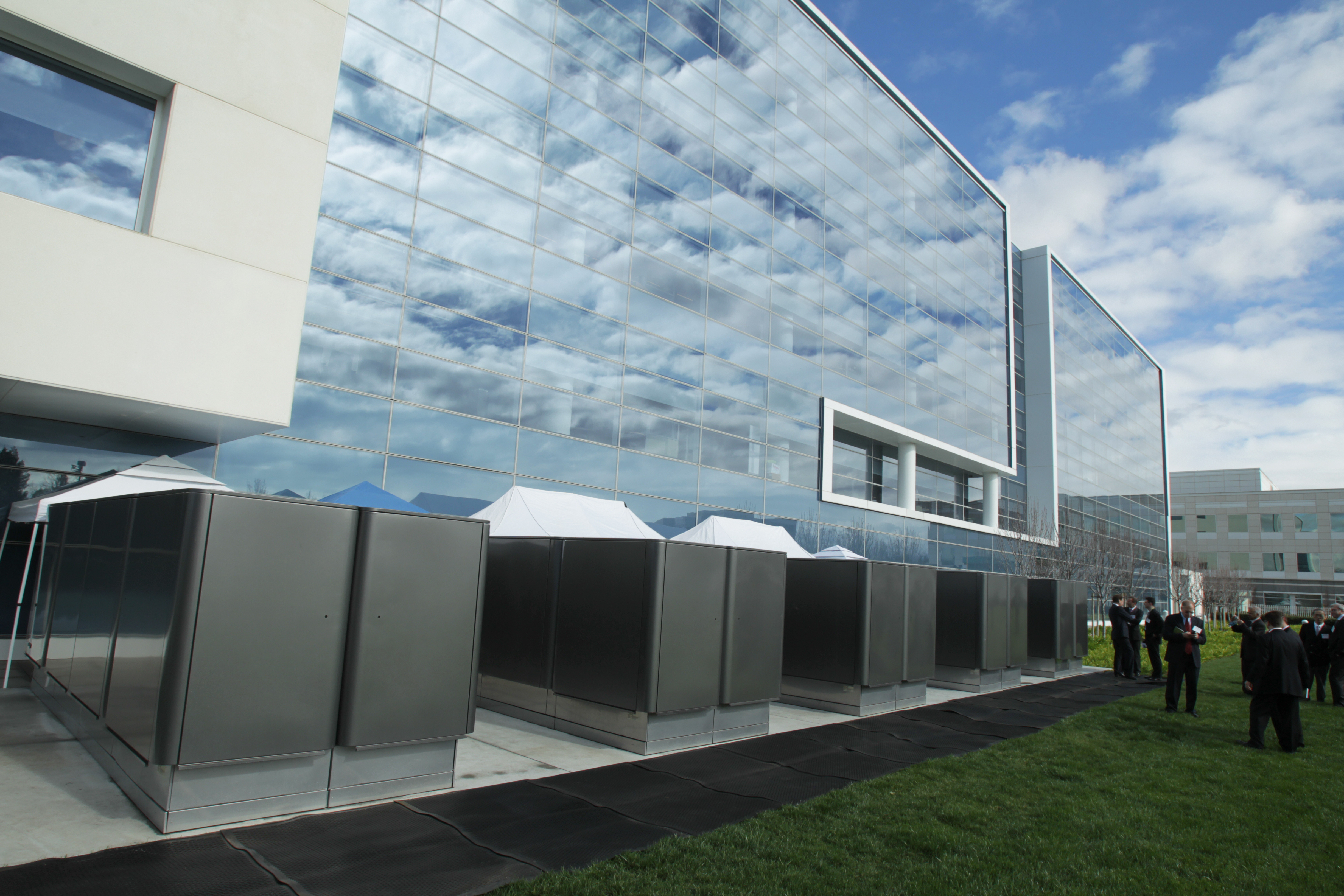
A 72.9-megawatt natural gas fuel cell facility on Amazon's Hilliard data center campus is moving toward a September 2027 operational date after receiving automatic state approval that bypassed city review, local notification and public hearings.
The 228 Bloom Energy fuel cells at 4186 Scioto Darby Creek Road will emit up to 1.45 million pounds of CO2 daily, equivalent to 66,000 gasoline vehicles running around the clock, according to the city of Hilliard's fuel cell FAQ page. The facility sits adjacent to the Darby Glen, Beacon and the Glens neighborhoods, near Beacon Elementary School and Darby Glen Park.
Ohio Power Company (AEP Ohio) will construct, own and operate the 6.4-acre facility on Amazon's 142-acre campus. Amazon covers all project costs. AEP cited insufficient electrical grid capacity to serve all planned data center buildings as the reason for the behind-the-meter generation.
How it was approved
Ohio's House Bill 15, passed in 2025, created a 60-day accelerated process at the Ohio Power Siting Board for data centers seeking to build major utility facilities on their own land. No public notice, no public hearing and no consultation with local officials is required.
Approval is automatic.
The OPSB approved the Hilliard fuel cell on Sept. 22, 2025. On Oct. 9, 2025, Amazon presented the project to Hilliard's Planning and Zoning Commission, calling it a "minor change" to the site layout. The commission debated and postponed a decision. Eleven days later, on Oct. 20, AEP Ohio withdrew its local zoning application, with a company attorney writing to the city, "No further review is necessary."
On Oct. 27, 2025, Hilliard City Council voted unanimously to hire an environmental law firm and appeal the Ohio EPA's air permit for the project. A citizens' petition gathered more than 1,000 signatures.
Safety and emissions concerns
Norwich Township Fire formally opposed the project in a November 2025 letter to the OPSB, citing life safety concerns about pressurized natural gas storage, CO2 release, fire and explosion hazards, and noting the department had not received sufficient technical documentation or emergency response plans.
An air dispersion study the city commissioned, presented in February 2026, found the fuel cells would raise CO2 levels by about 27.7 parts per million at the closest home (roughly 800 feet away) and about 3.6 ppm at Beacon Elementary (about 4,000 feet away). The city noted that CO2 health concerns typically begin around 5,000 ppm.
Hilliard resident Annie Cannelongo told the Ohio Capital Journal in March 2026: "They only notified the people right along the fence line. They didn't notify the whole neighborhood. We don't know how far the emissions effect."
Legislative response
State Reps. Christine Cockley (D-Columbus) and Tristan Rader (D-Lakewood) introduced House Bill 853 on May 12, 2026, in direct response to the Hilliard project. The bill would require decommissioning plans and safety plans submitted to local fire departments before construction of natural gas fuel cell facilities. HB 853 sits in the Ohio House Energy Committee and has not advanced.
AEP indicated construction was expected to begin in January 2026. The facility is projected to be operational by September 2027. A separate 8-inch natural gas pipeline will supply fuel to the cells, with a final route still undetermined.